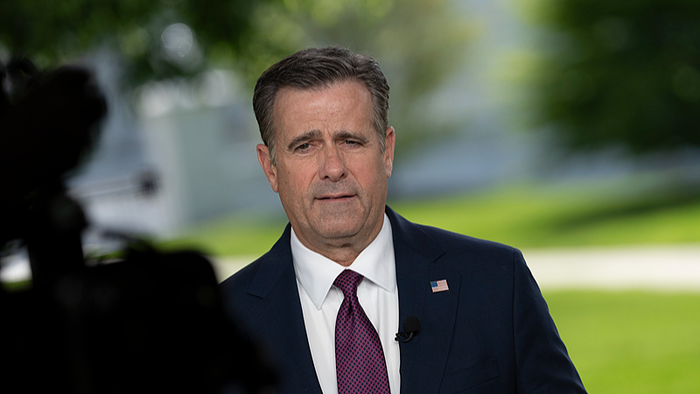
The Wall Street Journal disclosed late Wednesday that CIA Director John Ratcliffe’s unexpected trip to Moscow was intended to caution Russia against any aggression toward NATO members, sources said. The two‑hour meeting with senior Kremlin intelligence officials marked Ratcliffe’s first publicly acknowledged visit to the Russian capital and came after fresh U.S. intelligence assessments warned that President Vladimir Putin might test the alliance’s resolve with a limited strike on an allied nation within the next few years.
CIA Director’s Surprise Moscow Mission
According to officials briefed on the visit, Ratcliffe’s trip was designed to deliver a clear warning to Moscow not to attack NATO states. The journey, which was the first time the CIA chief’s presence in Russia has been confirmed publicly, followed a series of intelligence reports released earlier by the Wall Street Journal. Those assessments suggested that, feeling squeezed by the war in Ukraine and domestic pressures, Putin could consider a provocation ranging from a cyber‑attack to a modest ground incursion, most plausibly targeting a Baltic country.
Commentators have pointed to Estonia—a nation that frequently issues outspoken anti‑Moscow statements—as a potential flashpoint for such a limited operation. The journal also noted that Putin might be tempted to exploit perceived shortages in Western munitions, a shortfall attributed to the ongoing conflict in Iran and the sustained flow of arms to Ukraine over the past four years.
“A deficit in essential Western weapons, driven by spending on the Iran war, could influence Putin’s calculations,” the report read. “The United States has reduced its stock of certain systems because of transfers to Ukraine after Russia’s 2022 invasion, as well as the demands of the Iran conflict.”
While Western officials have for years warned that Russia seeks to expand its reach beyond Ukrainian territory, no concrete action or definitive evidence of such intent has yet emerged.
Signals of a Possible Russian Escalation in Ukraine
An update at 15:05 ET cited Bloomberg, which reported that three individuals with close ties to the Kremlin told the outlet President Putin is preparing a major escalation against Ukraine after peace negotiations stalled. The sources, who requested anonymity due to the sensitivity of the matter, indicated that Russia is weighing a heightened campaign of conventional ballistic missile strikes on Kyiv—including the city centre—and on critical infrastructure in other Ukrainian locales.
Bloomberg’s television segment framed the assessment as speculative, reflecting the prevailing trend on the ground, and noted that oil prices rose in response to the news.
Iran‑Oman Agreement on the Strait of Hormuz
The Islamic Revolutionary Guard Corps (IRGC) announced on Wednesday, via the Tasnim news agency, that Iran and Oman have reached a deal on how to divide control and revenues from the Strait of Hormuz. The agreement, described as a “fee” arrangement, paves the way for an interim reopening of the waterway, according to Bloomberg.
In a statement, an IRGC spokesperson said, “We began negotiations with Oman about a month ago and have now achieved results accepted by both parties. The two nations have agreed on their respective shares of the strait’s waters and the associated revenues.” The official added that earlier delays were caused by U.S. interference in the talks.
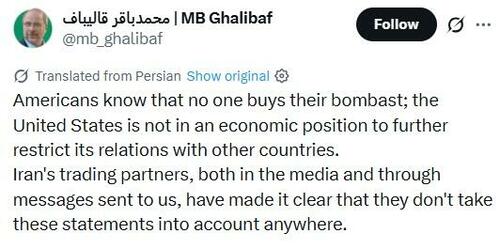
Tehran continues to demand that the United States lift its naval blockade of Iranian ports, yet the recent development suggests a willingness to engage in limited negotiations. Iranian Parliament Speaker Mohammad Bagher Ghalibaf reinforced this stance on Wednesday, asserting that any talks with the United States do not constitute a retreat from Iran’s core demands.
Ghalibaf on Negotiation and Resistance
In a response to hard‑line critics, the Iranian Parliament Speaker Mohammad Bagher Ghalibaf clarified that he does not view dialogue as inherently positive or negative. He stated that negotiation, while not a replacement for resistance, can serve as another arena of struggle. According to him, this approach is being pursued from a position of strength, preserving the nation’s dignity, wisdom, and interests.
U.S. Shift Toward Sanctions Over Military Action
Washington appears reluctant to resume direct military engagement. On Monday, Scott Bessent announced the “Economic D‑Day” initiative, which would impose secondary sanctions on any country that fails to comply with U.S. restrictions against Iran. The following day, Secretary of State Marco Rubio told a group of foreign officials that, for the time being, the United States would not launch new strikes against Iran. Instead, the administration is concentrating on strengthening sanctions and other non‑military pressure tools.
Oman‑Iran Transit Corridor Through the Strait of Hormuz
Iranian Foreign Minister Abbas Araghchi and Omani counterpart Badr Albusaidi confirmed ongoing work on an interim framework designed to restore shipping through the Strait of Hormuz. State television reports that the new transit corridor will traverse Iranian territorial waters and will include a section that also passes through Omani waters. The corridor is expected to span roughly seven miles. Both sides emphasized that the arrangement is a temporary measure aimed at easing tensions in the region.
Oil Market Response and Regional Activity
Oil prices have continued to decline amid the latest developments. The Gulf of Oman remains a busy hub, with at least fifteen scheduled STS (ship‑to‑ship) transfer sessions. These operations involve approximately 25 million barrels of crude oil and various refined products, sourced from almost every country in the region except Iran. The continued flow of oil through the corridor has helped to moderate market volatility.
President Trump’s Recent Statements on the Strait
On Tuesday, former President Trump suggested that military options against Iran remain available. He announced that all mines in the international waters of the Strait of Hormuz had been detonated or removed, and that the U.S. Space Force was monitoring the area “every square inch.” Trump reiterated a “zero‑tolerance” policy on mine placement, underscoring the U.S. commitment to maintaining maritime security. Despite these assurances, Iran maintains that the strait remains effectively closed.
The evolving diplomatic and economic maneuvers signal a complex interplay between military posturing and strategic negotiations, as both sides weigh the costs and benefits of escalation versus compromise.