Policy Overview
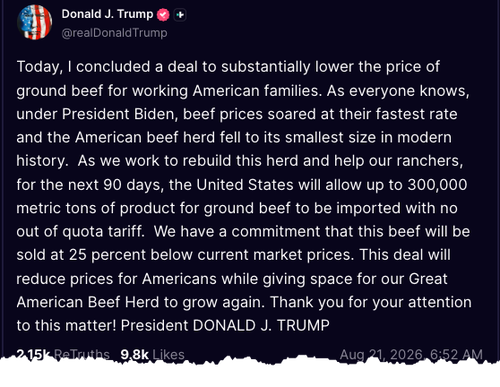
President Donald Trump announced a short‑term measure intended to ease grocery bills by allowing a sizable volume of ground beef to enter the United States without the usual out‑of‑quota tariff. The waiver covers up to 300,000 metric tons of product and will remain in effect for the next 90 days. In addition, the administration pledged that the imported meat would be sold at prices roughly 25% lower than current market levels.
Expected Market Effects
The tariff suspension is positioned as a direct cost‑saving for American shoppers, especially as meat prices have risen in recent months. By removing the additional duty on a large shipment, the government hopes retailers can pass on the discount to consumers. Analysts note that the 25% price cut, if fully realized, could translate into noticeable savings at the checkout, though the actual impact will depend on how quickly distributors and retailers adjust pricing.
Industry Reactions
Bloomberg’s agriculture reporter Ilena Peng highlighted that the relief could create a temporary dip in domestic ground‑beef prices, potentially pressuring U.S. producers who already face tight margins. She emphasized that while consumers may benefit in the short run, the longer‑term consequences for American farms remain uncertain.
Vance Howard, chief executive of Howard Capital Management and owner of a cattle ranch, expressed cautious optimism. He noted that the influx of cheaper imports might force domestic producers to become more efficient but warned that a sudden price swing could disrupt cash flow for smaller operations that lack the scale to absorb lower prices.
Risks and Considerations for Traders
From a trading perspective, the announcement introduces volatility into the beef futures market. The guaranteed 25% discount creates a pricing floor for imported product, which could widen the spread between domestic and foreign supply. Market participants will need to monitor how quickly the waiver is utilized and whether retailers actually transmit the savings to end‑users. Additionally, the temporary nature of the policy means that any price adjustments could reverse once the 90‑day window closes, potentially leading to a rebound in beef prices.
Overall, the tariff relief represents a calculated gamble: immediate consumer relief versus potential strain on U.S. beef producers and market stability.