Inflation as the Central Lens for Rate Outlook
Ketaki Sharma, the founder and chief executive of Algorithm Research, has placed inflation squarely at the centre of the current macro discussion. In a recent appearance on Bloomberg's programme "Horizons: Middle East and Africa," Sharma stated that inflation is the primary factor market participants must track when evaluating where the bond market is headed and what the Federal Reserve is likely to do next at its upcoming policy meeting.
Her framing underscores a widely held view among fixed-income strategists: until the trajectory of price growth becomes unambiguously clear, both Treasury yields and short-end rates will remain hostage to each new data print. For traders positioning their books ahead of the next FOMC cycle, Sharma's emphasis suggests that the weight of evidence in the rate path still runs through the inflation channel rather than through labour-market softness or consumer-confidence readings.
Analytical Implications for Traders and Investors
From an analytical standpoint, Sharma's comment carries several practical implications. First, it reinforces the case for monitoring a broad basket of inflation indicators — headline and core CPI, PCE, and regional Fed surveys — rather than relying on a single release. Second, it signals that bond-market positioning should remain reactive to data rather than pre-emptive, since the Fed's own internal modelling is heavily weighted toward inflation persistence.
Third, her remarks on a platform focused on Middle East and Africa suggest that the rate question is not confined to developed-market desks. Emerging-market sovereign bond managers, currency traders, and cross-border fund allocators are equally exposed to shifts in the U.S. policy rate, as dollar funding costs ripple through regional liquidity conditions.
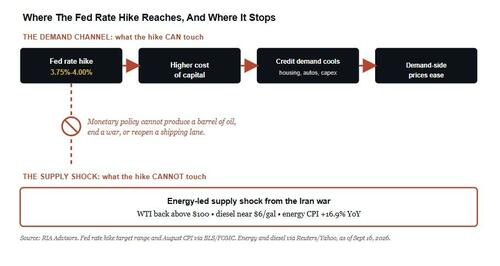
Sharma's position also implicitly cautions against over-weighting geopolitical headlines in the near-term rate calculus. While energy-supply disruptions can feed into inflation, the Fed's reaction function ultimately responds to the aggregate price signal, not to individual shock events in isolation.
What to Watch Going Forward
For readers following the "Analytic" desk, the key takeaway from Sharma's remarks is straightforward: the next several inflation prints will set the tone for bond yields, dollar positioning, and the probability distribution around the Fed's next move. Until that data delivers a consistent signal, volatility in rate-sensitive instruments is likely to persist, and algorithmic or discretionary strategies alike should treat inflation as the dominant macro variable in their models.