Post-FOMC Positioning and the Fracturing Oil-Yield Link
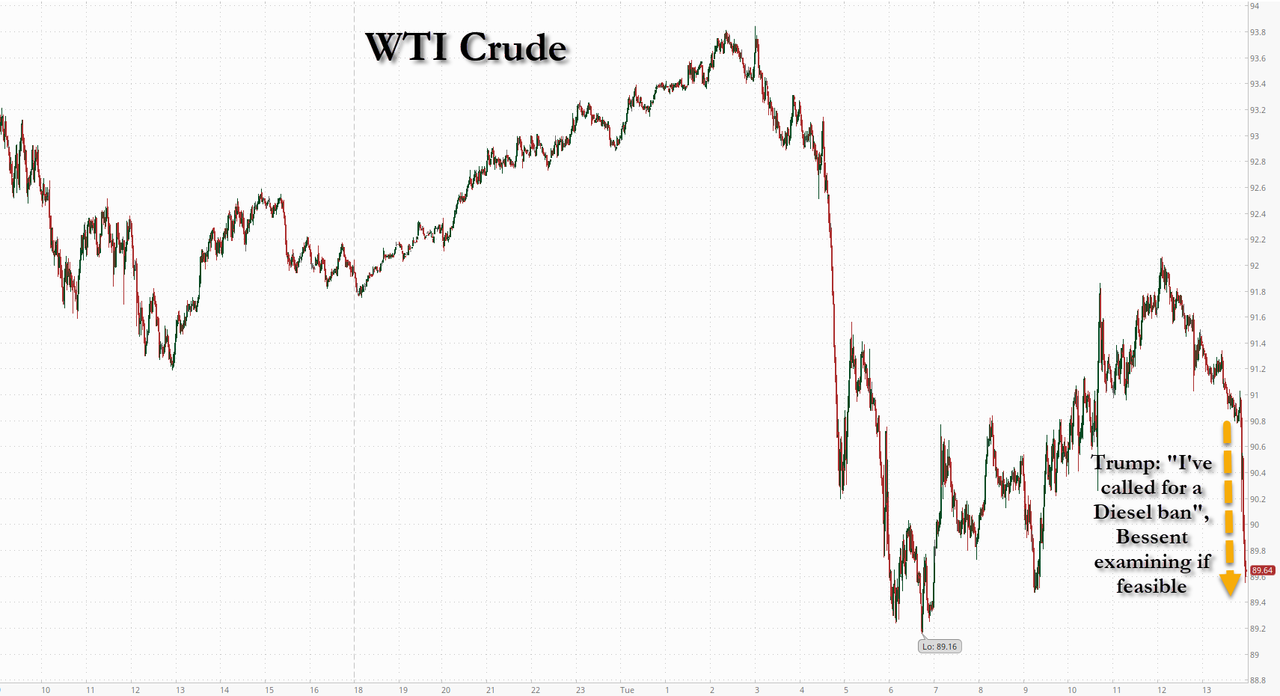
The 10-year U.S. Treasury yield continued its descent following the Federal Reserve's policy decision on Thursday, closing the week just below the 5% mark. Equities, which had been tracking Treasury moves closely earlier in the session, broke from that correlation in the final hours of Friday trading, drifting independently into the close. A pattern that had held for several weeks—where oil price direction served as a reliable leading indicator for yield moves—also fractured on Friday, underscoring that the market's pricing framework is in flux.
In a notable procedural change, the T-Report commentary from Academy Securities flagged that it now faces the same White House access restrictions as major broadcast networks such as CNN. The analyst described the situation as "definitely weird" and cautioned that while it may ultimately prove inconsequential, the optics are unusual and warrant monitoring.
Houthi Escalation, Saudi Energy Exposure, and Disruption Pricing
A central analytical question this week has been how to classify the ongoing confrontation between the Houthis and Saudi Arabia within the broader Iran–U.S. conflict. The Houthis operate as an Iranian proxy, and the Saudis are a U.S. ally working closely with the White House. The analyst argued that the Houthis appear to be acting with a degree of independence, seizing what they perceive as a window of U.S. distraction with Iran. Strikingly, they have reportedly gone to considerable effort to avoid targeting U.S. assets directly, instead concentrating strikes on Saudi energy infrastructure—including, per reports, jet-fuel facilities at an airport.
The damage to the pipeline that serves as the "alternative to the Strait" route was assessed as more severe than a simple pipeline rupture, with surrounding infrastructure also affected. Critically, there is no evidence that a second wave of strikes can be prevented. The analyst urged market participants to begin pricing in recurring energy-complex disruptions that fall outside the narrow U.S.–Iran framework.
Open questions remain: Can the Saudis defend their own infrastructure, or will they pressure Washington for a more direct military role? If Houthi attacks escalate to threaten Red Sea shipping, how far can they push before U.S. intervention becomes unavoidable? European involvement is viewed as highly unlikely in the near term, even if strategically warranted.
A recurring behavioral pattern in market reaction was highlighted: investors tend to sell aggressively on confirmed supply disruptions but buy on any positive headline, rumor, or diplomatic hope. The analyst cautioned that this asymmetric reaction may need to be re-evaluated as the conflict drags on.
Diesel Tightness as the Next Inflation Pressure Point
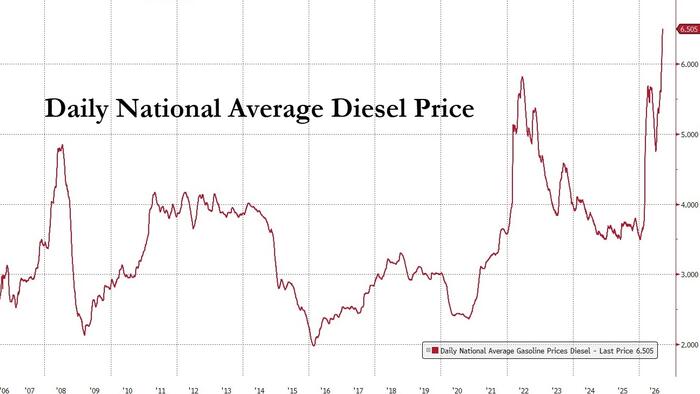
Since the war's outset, the focus has shifted from crude oil to LNG and, more importantly, diesel. Both products sit in tighter supply conditions than crude, with fewer alternative routes and less flexibility to reroute flows. The analyst emphasized that rather than fading the trade once it becomes consensus (a strategy he likened to his mother recognizing a market move), participants should acknowledge that the diesel risk to industrial output, transportation, agriculture, and even backup power at data centers is now a mainstream concern.
The diesel price chart had already breached a previously identified resistance threshold—described as the "red circle" from last week's version of the analysis. This break has triggered discussion in Washington about restricting U.S. diesel exports. The analyst judged that such a measure would be largely ineffective: even with export caps, the domestic price would remain anchored to the global benchmark minus transportation and storage costs. It would also harm U.S. refiners and exporters by introducing contract uncertainty and inviting legal challenges.
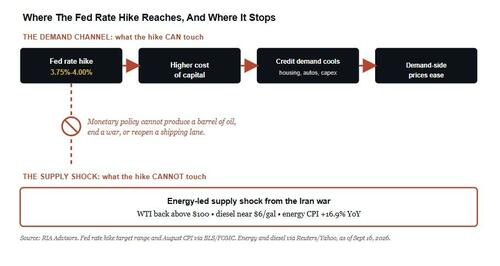
Rising diesel prices were placed high on the list of controllable inflation pressures—controllable only by those directing the military effort. This is, by extension, a direct input into the Fed's inflation calculus and a key variable for global rate trajectories over the coming weeks.
Iran Sanctions, Infrastructure Threats, and the Post-Midterm Window
A diplomatic resolution remains possible. An MOU was signed earlier, though the analyst noted that from the outset there appeared to be divergent "unwritten" interpretations on both sides, suggesting neither party had fully internalized the other's positions. He declined to discount a deal but expressed skepticism that any agreement reached under current conditions could be framed as a clear U.S. victory.
Economic sanctions and the naval blockade have proven effective in pressuring Iran. The blockade has succeeded in scaring a substantial share of shipping traffic away from the Strait, even though some trade continues to flow through. Sanctions may ultimately be sufficient to force a favorable negotiation, but the analyst did not expect that outcome within days.
On the military front, the prospect of degrading Iran's critical infrastructure was assessed as possible but fraught: the U.S. would face a difficult balancing act between applying enough force to compel change and avoiding reputational or legal overreach. A separate line of thinking, discussed by retired General Bellon, involves securing the islands that control the Strait—potentially culminating in an operation around Kharg Island—timed for the period after the U.S. midterm elections. The rationale is that once Iran observes U.S. naval assets moving into position and the political constraint of an upcoming election cycle has passed, Tehran may capitulate and seek terms. The analyst found this scenario plausible, if somewhat optimistic.
The President has announced a deal, but the analyst reserved full judgment until the actual terms are documented. He noted the usual pattern of competing assertions from multiple parties with little verifiable documentation. The deal could be a genuine game-changer, or it could be a cosmetic update to agreements drafted years ago. The question of whether the Greenland annexation rhetoric was necessary to reach the table was raised but left open. A full analysis, in coordination with the GIG, was scheduled for the following Tuesday.
US-China Summit: Compute, Cyber, and a Shifting Priority Stack
The priority stack for the upcoming U.S.–China summit has shifted dramatically in a matter of months. A few months ago, trade, rare earths, and critical minerals dominated the agenda. Weeks later, Iran and global energy security moved to the top. Now, cyber security, artificial intelligence, and compute capacity are the highest-priority items.
A structural asymmetry was flagged: on most of these issues, the U.S. appears to need more from China than China needs from the U.S.—a dynamic that complicates the negotiating posture heading into the summit. The analyst expressed a bias toward downside risk in the "compute spend" narrative, noting that cheap Chinese compute capacity remains a persistent competitive threat. Paradoxically, this is supportive for Chinese credit spreads even as it pressures U.S. tech valuations.
With the Fed meeting now behind the calendar, the next policy pivot will be data-dependent. But the analyst was clear that the dominant market drivers for the coming week—and likely the coming month—will be the trajectory of diesel prices, the pace of Houthi–Saudi escalation, the terms of any Iran agreement, the direction of global rates, and the outcome of the U.S.–China summit. He expected a choppier, lower-biased tape for risk assets, with energy and rate markets tilting higher absent a genuine de-escalation. The week would bookend with a Monday morning CNBC appearance and a Friday morning Bloomberg segment to dissect the summit's aftermath.