Roman's Outlook: Rates Set to Fall on Geopolitical De-escalation
Emmanuel Roman, chief executive of Pimco, the world's largest bond manager, offered a forward-looking assessment of the fixed-income landscape during an interview with Bloomberg's David Gura at the 2026 Qatar Economic Forum (UNGA Special Edition, powered by Bloomberg). Roman argued that the current level of interest rates already reflects a risk premium tied to ongoing Middle East instability, and he expects that premium to unwind once a diplomatic or military resolution takes shape.
In his own words, Roman projected that the instant a more favorable outcome materializes in the region, the bond market would experience what he described as a "release," with yields trending downward from their present levels. The implication for currency markets is straightforward: a sustained drop in U.S. and global bond yields typically weakens the dollar and lifts risk-sensitive FX pairs, while also altering the carry-trade calculus that drives short-term positioning.
Inflation Framed as a Transitory Shock
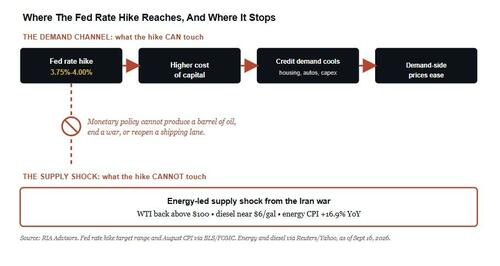
A second thread in Roman's remarks concerned the inflation environment. He characterized the inflation shock currently feeding into central-bank decision-making as "somehow transitory," explicitly linking that assessment to the disruptions caused by the Middle East conflict. In analytical terms, Roman is signaling that he views the supply-side and energy-price pressures triggered by the geopolitical episode as a one-off disturbance rather than a structural reset to the inflation path. If that reading proves correct, it would support the case for central banks to hold or gradually ease policy rather than tighten further, a stance that would be bullish for duration assets and, by extension, for currencies of higher-yielding economies that currently benefit from rate differentials.
Analytic Takeaways for FX Participants
For traders and portfolio managers monitoring the G-10 and emerging-market FX space, Roman's comments carry three practical implications. First, the bond market appears to be pricing in a "wait-and-see" posture until the Middle East situation clarifies, meaning vol surfaces in rates and FX are likely to remain elevated in the near term. Second, the CEO's transitory-inflation framing suggests he does not expect a second-round effect on wage expectations, which would keep the policy path on a gradual-easing trajectory. Third, the specific trigger he identifies—a geopolitical resolution—offers a discrete, monitorable event that could produce a sharp repricing in both Treasury yields and the dollar index, making it a high-conviction catalyst to watch in the coming weeks.
Roman's remarks were made in the context of the 2026 Qatar Economic Forum's UNGA Special Edition session, a venue that has increasingly become a platform for global asset managers to signal their macro views ahead of central-bank meetings.