Dollar Retreat Ignites Short Covering in Coffee Markets
Coffee futures staged a notable recovery on Friday, reversing early-session losses to close in positive territory. The December 2026 arabica contract (KCZ26) gained 4.00 cents, or 1.45 percent, while the November 2026 robusta contract (RMX26) added 5 points, a 0.15 percent rise.
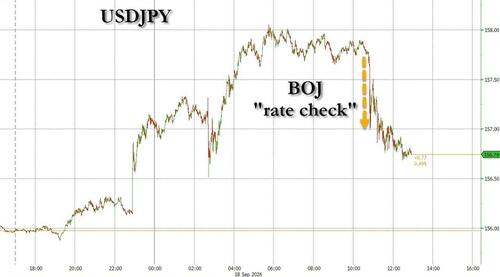
The catalyst was a shift in the dollar. The Dollar Index (DXY) pulled back from a seven-week high and began trading lower intraday, which analysts say triggered a wave of short covering across coffee futures. This came after three consecutive weeks of sustained downside pressure, during which robusta touched a one-week low on Friday and arabica hit a 2.5-month low on Thursday. The broader backdrop of ample global supply had kept sellers in control, but the dollar's brief respite gave long positions a chance to re-enter.
Record Surplus and Export Record-Setting Weigh on Valuations
The International Coffee Organization (ICO) issued a striking projection last Thursday, forecasting a record global harvest and the first supply surplus in five years. According to the ICO, 2025/26 world coffee output is expected to climb 4.4 percent year on year to a record 183.6 million bags, while consumption is projected to dip 0.9 percent to 180.6 million bags. The result is an estimated three-million-bag oversupply, a figure that has been central to bearish sentiment in the market.
Brazil's role in that surplus is particularly visible. As the country's harvest enters its final stages, fresh stock is flooding export channels and undercutting prices. Cecafe data released last Thursday showed Brazil's total August coffee exports surged 31 percent year on year to 4.155 million bags, the highest level ever recorded for that month. Within that total, arabica shipments rose 26 percent to 2.87 million bags, and robusta exports jumped 54 percent to 953,592 bags. Separately, Brazil's Trade Ministry reported on Tuesday that August coffee exports grew 44.6 percent year on year to 206,618 metric tonnes, the strongest monthly figure in eight months.
Vietnam, the world's leading robusta producer, is adding to the supply picture as well. Robusta prices touched a three-month low on September 3 amid signals of expanding Vietnamese output. The country's National Statistics Office reported last Wednesday that 2026 coffee exports through August rose 13.7 percent year on year to 1.33 million metric tonnes, while full-year 2025 shipments jumped 17.5 percent to 1.58 million metric tonnes. Vietnam's 2025/26 crop is projected to increase 6 percent to a four-year high of 1.76 million metric tonnes, equivalent to roughly 29.4 million bags.
Weather and Inventory Signals Paint a Divided Picture
Growing conditions in both Brazil and Vietnam are currently leaning bearish. Above-average rainfall during Brazil's critical flowering phase could bolster the next season's 2026/27 arabica crop. Somar Meteorologia reported on Monday that 59.4 millimetres of rain fell in the week ending September 13 across Minas Gerais, the state that anchors Brazil's arabica belt. That figure represented 1,212 percent of the historical average for the period. In Vietnam, forecaster Vaisala noted that heavy rains have replenished soil moisture in the Central Highlands, the country's principal coffee region, and are expected to support cherry development.
On the inventory front, the two varieties are telling different stories. ICE arabica stocks dropped to a 27-year low of 217,646 bags on Tuesday, a level that is structurally supportive for prices, before rebounding to a 1.5-month high of 258,415 bags by Friday. Robusta, by contrast, saw ICE registered inventories climb to a 9.5-month peak of 5,043 lots on Monday, a development that reinforces bearish sentiment in the green variety.
El Niño and USDA Forecasts Frame the Risk Landscape
A countervailing bullish factor looms in the form of El Niño. Coffee trader Commercial warned that the weather pattern could delay September and October rains in Brazil, precisely when flowering typically occurs, potentially impairing the 2026/27 crop. The U.S. Climate Prediction Center cautioned on July 8 that the El Niño developing across the equatorial Pacific is likely to rank among the strongest in more than 75 years, raising the prospect of prolonged floods, droughts, and temperature extremes across Asia and South America that could disrupt production in the second half of the year.
The USDA's biannual outlook, published on July 22, leaned bearish. The agency projected global 2026/27 output to expand 6.0 percent, or 10.8 million bags, to a record 189.7 million bags, driven largely by improved conditions in Brazil. Global arabica production is expected to rise 12 percent year on year, while robusta output is forecast to decline a modest 0.7 percent. World ending stocks are seen increasing by 1.9 million bags to 26.3 million. Earlier, on June 3, the USDA's Foreign Agricultural Service pegged Brazil's 2026/27 crop at a record 71.9 million bags, up 14 percent year on year.
For forex and commodity traders, the near-term picture remains dominated by oversupply fundamentals and a soft dollar that can amplify price moves in both directions. The key variables to watch in the coming weeks are whether El Niño materializes as a genuine production threat, how quickly Brazilian and Vietnamese stock reaches terminal markets, and whether the dollar's recent retreat from its seven-week peak marks a broader trend shift that could sustain the short-covering rally seen on Friday.