Two Quantum Pioneers, One Destination: the United States
A pattern that has been building across European high-tech sectors is now reaching the frontier of quantum computing. Through separate stock-market transactions, Finland's IQM and France's Pasqal are progressively anchoring their capital structures, market access, and strategic direction in the United States. The moves are not outright sell-offs to American buyers; in both cases, existing shareholders retained their equity positions. Nevertheless, the practical effect is the same: the liquidity, investor base, regulatory environment, and ultimately the strategic gravity surrounding these firms are shifting across the Atlantic.
IQM, a Finnish firm specialising in superconducting quantum processors developed for research, high-performance computing, and industrial use, completed its merger with Real Asset Acquisition Corp., a U.S. special-purpose acquisition vehicle. In early July the combined entity began trading on the Nasdaq under the ticker IQMX at a valuation of roughly $1.8 billion. Pasqal, a French spin-off of the Institut d'Optique established in 2019, followed a similar trajectory. On 28 August it merged with Bleichroeder Acquisition Corp. II, another American shell vehicle, and is now valued in the neighbourhood of $2 billion – a figure the source article notes is likely a snapshot rather than a ceiling on the company's potential.
The distinction between a full sale and a listing-driven re-registration matters on paper, but the article's author, Thomas Kolbe writing for American Thinker, argues it changes little in practice. American patents, American market infrastructure, and an expanding share of governance influence will increasingly be rooted in U.S. jurisdiction, even when the engineering and research teams remain in Europe.
A Widening Economic Bleed Across the Euro Zone
The quantum-computing departures do not occur in isolation. The broader macroeconomic backdrop in the EU has deteriorated sharply. In the first half of the year, Germany logged its highest number of corporate insolvencies since 2013, with thousands of industrial positions eliminated in the process. The article frames this as an accelerating trend driven by the combined weight of costly climate regulation, constrained fossil-fuel energy supplies, and a rising burden of compliance costs that, in the author's words, act as an accelerant on euro-zone business activity.
The same dynamic is visible in Finland, where IQM chose to re-list, and in France, where Pasqal's academic and industrial ecosystem is now tethered to a U.S. exchange. The author contends that a political course correction to reinforce the economic base remains politically impossible in Brussels and national capitals, and that the resignation with which these capital outflows are accepted underscores a deeper institutional problem.
Why Quantum Computing Deserves Strategic Attention
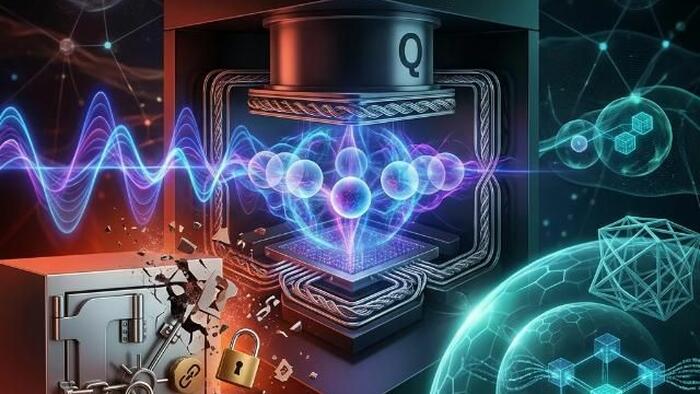
For readers tracking market-moving technology themes, the article takes time to explain why quantum computing is not simply the next iteration of classical computing. Conventional processors operate on binary switches – a bit is either on or off. Quantum machines work with qubits, which can exist in superpositions of both states simultaneously and, through entanglement, can be linked so that measuring one instantly determines the state of its partner regardless of physical distance. Where a classical machine tests one candidate solution at a time, a quantum device can, in principle, explore millions of computational paths in parallel.
This does not make quantum machines superior for everyday tasks such as word processing or video playback. Their advantage emerges in problems that require finding the optimal combination among an astronomically large solution space: simulating novel molecules for drug discovery, optimising complex logistics networks, or – critically for markets – cracking current cryptographic schemes. Strategy documents from the United States, China, and the EU all explicitly name quantum computing as a key technology that will reshape materials science, pharmaceuticals, and cybersecurity.
The technical approaches differ. IQM builds on superconducting circuits, the same family of qubits pursued by IBM and Google. Pasqal takes a markedly different route: its researchers trap individual rubidium atoms using focused laser beams – a technique called optical tweezers – inside vacuum chambers and arrange them into precise two- and three-dimensional lattices. This method appears to sidestep the fabrication defects that have plagued other qubit platforms and makes scaling to larger qubit counts considerably more tractable. The company's systems are already finding customers at institutions as varied as the Jülich Research Centre in Germany, Saudi energy major Aramco, French utility EDF, and bank Crédit Agricole, where the race to develop post-quantum cryptography has already begun.
The Strategic and Geopolitical Stakes for Europe
One of Pasqal's co-founders is Alain Aspect, the French physicist who shared the 2022 Nobel Prize in Physics with John Clauser and Anton Zeilinger for demonstrating quantum entanglement of photons – work that laid the scientific groundwork for the entire field. The fact that such foundational research is now channeled through a U.S.-listed vehicle illustrates how the boundaries between European academic output and American capital markets are blurring.
The author draws a sharper conclusion: the EU is losing the intellectual and industrial pillars that once anchored its high-technology base. The continent, described as energy-poor, politically constrained, and directionless in the face of uncertain economic conditions, no longer offers the combination of capital depth, regulatory predictability, and talent-magnet incentives needed to retain cutting-edge research, attract top-tier venture investment, and build future-oriented clusters in quantum computing, robotics, or artificial intelligence.
The closing observation, borrowing a line attributed to Ayn Rand, is that ignoring economic reality does not eliminate its consequences. For market participants, the implication is straightforward: the centre of gravity for next-generation computing – and the patents, data, and security implications that follow – is consolidating in the United States, while Europe's share of that frontier quietly erodes.