A Unanimous Hike, a Sullen Market
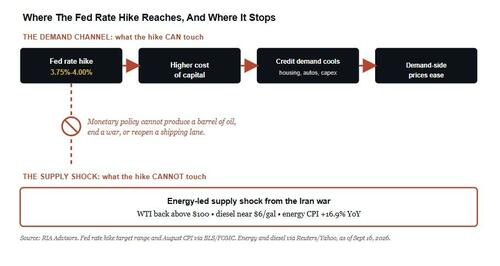
The Federal Open Market Committee delivered a 25-basis-point increase to the federal funds target rate on September 16, 2026, pushing the range to 3.75 percent–4.00 percent. All twelve voting members of the committee backed the move, a level of consensus that left little room for doubt about the direction of policy. Prediction markets heading into the meeting had already priced in the hike, so the surprise lay not in the decision itself but in the accompanying language.
Equities told the story of that surprise. The Dow Jones Industrial Average shed 631 points to lead the losses, while the S&P 500 and Nasdaq Composite also finished the session in negative territory. Although all three benchmarks recovered from their intraday lows during the final forty minutes of trading, none managed to claw back to the red. The magnitude of the Dow's decline underscored how quickly sentiment shifted once the committee's statements hit the wire.
Two Words That Rewired the Narrative
The phrase that sent ripples through trading desks was Fed Chair Kevin Warsh's use of the words "timelier return." In his prepared remarks, Warsh painted a picture of a strengthening U.S. economy, pointed to favorable job growth and a low unemployment rate, and remarked that he would be "hard-pressed to describe broad financial conditions as restrictive." On the surface, those comments acknowledged a healthy labor market. But the inflation framing carried a far more aggressive message.
Warsh stated that today's policy action would support a "timelier return to the committee's 2 percent goal." That qualifier — timelier — is the crux. It signals that the committee is no longer satisfied with a gradual drift toward the target; it expects a faster, more deliberate trajectory. Headline inflation has moderated since May, yet it has remained above the 2 percent threshold for more than five years. For Warsh and his colleagues, that persistence is intolerable.
The language is a direct escalation from his August 28 speech at the Jackson Hole symposium, where Warsh effectively drew a boundary: a mere decline in prices would not be sufficient. Inflation would need to fall at a speed the committee deemed adequate, or further tightening would follow. The September presser confirms that, in the Fed's assessment, that speed has not yet been achieved.
The Dot Plot: Another Hike Before Year-End, No Cuts in 2027
The Summary of Economic Projections released alongside the decision reinforced the hawkish tilt. The updated dot plot projects an additional 50-basis-point increase in the federal funds target rate before the close of 2026 — meaning one more 25-point hike after today's move. Beyond that, the median projection holds the policy rate near 4.1 percent through the end of 2027, with no rate cuts penciled in for next year.
Perhaps most consequential for bond traders and duration-sensitive equity holders is the timeline for core inflation. The committee now sees a return to 2 percent core inflation not in 2027, but in 2029. That two-year delay relative to earlier guidance implies a prolonged period of elevated borrowing costs across the economy.
The AI Trade Faces a Funding Stress Test
The analytical question for equity investors and forex traders alike is how a higher-for-longer rate environment interacts with the capital-intensive build-out of artificial intelligence infrastructure. Data centers, GPU clusters, and the associated power and networking investments require substantial debt financing. If lending costs climb incrementally — even by a quarter or half a point — the project economics at the margin tighten, and the pace of deployment could slow.
That slowdown, however modest, carries outsized implications. Wall Street's bull market over the past four years has been overwhelmingly anchored in AI-related earnings growth and multiple expansion. If the cost of capital for the sector's most capital-hungry components rises, revenue forecasts that assume aggressive capex schedules come under pressure. The "music stops" scenario is not a matter of rates spiking dramatically; it is a matter of the tempo of AI investment decelerating just enough to break the self-reinforcing narrative that has propped up valuations.
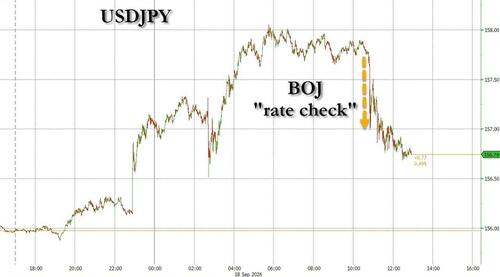
For currency traders, the transmission channel is equally clear. A Fed that is willing to stomp on growth to deliver price stability supports the dollar against currencies of central banks that are still cutting or holding at lower levels. The 4.1 percent median projection through 2027 gives U.S. rate differentials a structural edge, a factor that will likely persist in carry-trade calculations well into next year.
The September 16 decision, in sum, is not merely a single 25-basis-point tick. It is a policy signal that the Fed's priority hierarchy has tilted decisively toward disinflation, that the tolerance for "good enough" progress on prices has been eliminated, and that the financial conditions underpinning the AI equity rally now face a sustained headwind from the cost of capital.