Basics of Interest Rate Differentials
Interest rate differentials represent the gap between the monetary policy rates set by two economies. When one country offers a higher nominal rate than another, the currency of the higher‑rate country tends to attract capital flows seeking better returns. The differential is often expressed in terms of the policy rate, the overnight interbank rate, or the yield on a benchmark government bond. Even modest differences can exert significant pressure on exchange rates, especially when they persist over time.
The theoretical foundation is straightforward: investors compare the yield on a domestic asset to the yield on a foreign asset adjusted for exchange‑rate risk. If the domestic yield is higher and the expected depreciation of the domestic currency is small, the domestic currency becomes more attractive. The arbitrage relationship that emerges is captured by the covered interest‑rate parity (CIRP) equation, which links the spot exchange rate, the forward rate, and the interest rate differential.
The Carry Trade and Its Implications
The carry trade is a popular strategy that directly exploits interest rate differentials. A trader borrows in a low‑rate currency, converts the proceeds into a high‑rate currency, and invests in a yield‑bearing asset. The profit comes from the spread between the borrowing cost and the return on the investment, minus transaction costs and potential exchange‑rate losses.
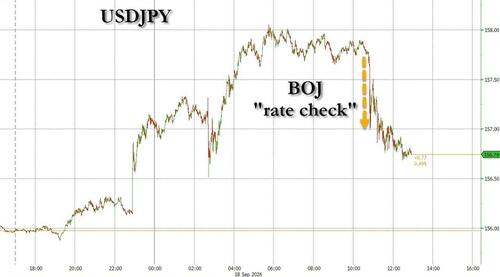
Because the carry trade relies on the expectation that the high‑rate currency will not depreciate enough to erase the spread, traders monitor the differential closely. A widening differential usually signals that the high‑rate currency is strengthening, while a narrowing differential may presage a reversal. By tracking the trend of the differential, traders can gauge the sustainability of a carry trade and decide when to enter or exit positions.
Market Expectations and Forward Premiums
Forward contracts provide a market‑based estimate of future exchange‑rate movements. The forward premium or discount reflects the interest rate differential between the two currencies: a forward premium indicates that the market expects the currency to appreciate relative to the other, whereas a discount signals expected depreciation. The formula is:
Forward Premium (or Discount) = (Forward Rate – Spot Rate) / Spot Rate
When the forward premium aligns with the interest rate differential, the market is said to be in equilibrium. Deviations can reveal mispricings or expectations of future policy shifts. Traders use forward curves to anticipate currency moves and to construct hedging strategies that lock in favorable rates.
Practical Trading Strategies
- Interest‑Rate Differential Trend Analysis – Plot the differential over time and look for sustained trends. A persistent widening suggests a strengthening currency; a persistent narrowing may warn of weakening.
- Carry Trade Execution – Identify pairs where the borrowing cost is low and the investment yield is high. Use stop‑loss levels to protect against sudden reversals.
- Forward Curve Arbitrage – Compare the forward premium to the actual differential. If the forward market over‑prices a currency relative to its differential, a trader may short the forward and go long the spot.
- Hedging with Interest‑Rate Swaps – Swap fixed for floating rates to lock in a favorable differential, reducing exposure to rate changes.
Each strategy benefits from disciplined risk management. Position sizing should reflect the volatility of the differential and the liquidity of the currency pair.
Risks and Considerations
- Policy Uncertainty – Central bank decisions can shift rates abruptly, altering the differential and invalidating assumptions.
- Liquidity Constraints – In periods of market stress, borrowing costs may rise sharply, eroding the carry trade spread.
- Exchange‑Rate Volatility – Even a small differential can lead to large losses if the currency moves sharply against the trader’s position.
- Transaction Costs – Spreads, commissions, and funding costs can erode the theoretical profit from the differential.
By remaining vigilant to these risks and continuously monitoring the differential, traders can use interest rate differentials as a reliable indicator of currency valuation and build strategies that capitalize on predictable market behavior.