What Is a Carry Trade?
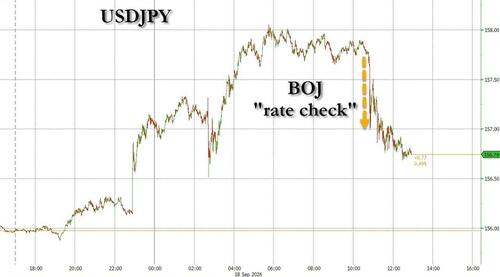
A carry trade is a strategy where a trader borrows in a currency with a low interest rate and invests in a currency with a higher rate. The goal is to profit from the difference between the borrowing cost and the earning rate, while also potentially benefiting from favorable exchange‑rate movements. The trade is typically executed in two steps: first, the trader exchanges the low‑yield currency for the high‑yield currency; second, the trader holds the high‑yield currency to capture the interest spread.
The Role of Interest Rate Differentials
The interest rate differential is the numerical expression of how much higher the yield on the target currency is compared to the funding currency. If Currency A offers a 3 % yield and Currency B offers a 1 % yield, the differential is 2 %. In a carry trade, this 2 % becomes the expected return on the position, provided the exchange rate remains stable or moves in the trader’s favor. The differential is calculated from the most recent policy rates set by central banks or from inter‑bank market rates.
Calculating Carry Trade Returns
To estimate potential profits, traders use the following formula:
Return = (Interest Rate Differential) × (Investment Amount) ÷ (365 days)
For example, borrowing 100,000 units of Currency B at 1 % and investing the same amount in Currency A at 3 % yields an annual differential of 2 %. The daily return would be 0.0055 % (2 % ÷ 365), translating to roughly 2 % over a full year, assuming no change in exchange rate. Many platforms provide calculators that factor in transaction costs and potential rollover fees, giving traders a clearer picture of net carry.
Risks and Market Dynamics
While the mechanics are straightforward, carry trades are exposed to several risks:
- Exchange‑rate risk – A sudden move against the trader can wipe out the interest advantage. If the high‑yield currency depreciates, the loss may exceed the differential.
- Liquidity risk – In times of market stress, the funding currency may become expensive or unavailable, forcing a quick exit at a loss.
- Interest‑rate risk – Central banks can adjust rates, narrowing or eliminating the differential. A tightening policy in the high‑yield currency reduces the spread.
- Leverage risk – Many carry trades use margin, amplifying both gains and losses.
Risk management tools such as stop‑loss orders, position sizing limits, and continuous monitoring of macro‑economic indicators are essential to mitigate these exposures.
Practical Considerations for Traders
When evaluating a carry trade, traders should:
- Compare policy rates from credible sources, not just headline figures.
- Assess transaction costs, including spreads, commissions, and rollover fees.
- Monitor currency volatility through measures like the Average True Range (ATR) to gauge potential exchange‑rate swings.
- Diversify across multiple currency pairs to spread risk.
- Use hedging instruments, such as options or forward contracts, to protect against adverse moves.
By systematically analyzing interest differentials and applying disciplined risk controls, traders can harness the carry trade as a reliable component of a broader portfolio strategy.