Liquidity Hotspots in the Forex Market: Where the Action Really Happens
Understanding where and when the majority of forex trades occur is essential for any trader seeking to optimize execution and reduce slippage. Liquidity, the ability of the market to absorb large orders without significant price impact, is not evenly distributed across time or across currency pairs. By identifying the key periods and pair categories that concentrate liquidity, traders can align their strategies with market flow and improve trade quality.
1. Understanding Liquidity in Forex
Liquidity in the forex market is largely driven by the participation of institutional players—banks, hedge funds, and large corporates—who trade in substantial volumes. These participants generate the depth of order books that allow for smooth price movements. When liquidity is high, bid‑ask spreads narrow, and price swings are typically more predictable. Conversely, low liquidity conditions often produce wider spreads, higher volatility, and a greater risk of slippage.
The market’s liquidity profile is shaped by three main factors:
- Trading Volume – The total amount of currency exchanged during a period.
- Bid‑Ask Spread – A narrower spread indicates tighter liquidity.
- Order Book Depth – The number of orders available at various price levels.
A trader’s goal is to enter and exit positions when these factors align favorably, thereby minimizing transaction costs and maximizing the probability of hitting desired price levels.
2. Market Hours and Overlaps
The global forex market operates 24 hours a day, but liquidity is not uniform across all sessions. The market is divided into five major trading sessions: Sydney, Tokyo, London, New York, and Hong Kong. The most significant liquidity concentrations arise during the overlap periods when two major sessions are active simultaneously.
| Overlap | Typical Hours (GMT) | Key Characteristics |
|---|---|---|
| London/New York | 13:00–18:00 | Highest daily volume, tightest spreads, most active major pairs |
| Tokyo/London | 07:00–12:00 | Strong Asian influence, moderate spreads, good for minor pairs |
| New York/Tokyo | 18:00–23:00 | Lower volume, wider spreads, suitable for carry trades |
During these overlaps, market makers and liquidity providers increase activity, resulting in a higher probability that large orders will be filled near the quoted price. Traders who time entries to coincide with these overlaps can often secure better execution and reduced slippage.
3. Major vs Minor Currency Pairs
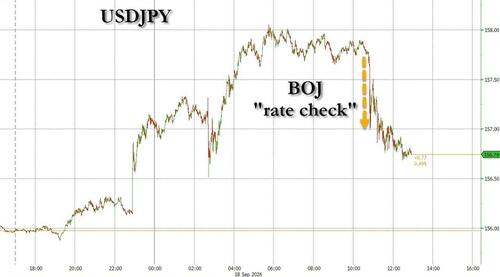
The forex market is traditionally split into major pairs—those that include the U.S. dollar and are the most heavily traded—and minor (cross) pairs, which exclude the dollar. Major pairs such as EUR/USD, GBP/USD, and USD/JPY typically exhibit the highest liquidity because they are the most common instruments for institutional hedging.
Minor pairs, like EUR/GBP or AUD/NZD, tend to have lower daily volumes and wider spreads. However, during certain overlaps—especially the London/Tokyo overlap—some minor pairs experience a surge in liquidity as traders seek exposure to regional economies.
A practical approach is to:
- Prioritize major pairs during the London/New York overlap for tight spreads and robust volume.
- Target minor pairs during the Tokyo/London overlap when liquidity dips but still remains sufficient for precise entries.
- Avoid major market gaps that occur during session closures, where liquidity can be thin and price jumps frequent.
4. Identifying Liquidity Hotspots
Beyond session overlaps, certain timeframes and market conditions consistently attract high liquidity:
- First 30 Minutes of a Major Session – Market participants often process overnight news, leading to rapid order placement.
- Economic Data Releases – Scheduled releases such as non‑farm payrolls or GDP figures trigger large institutional trades.
- Central Bank Announcements – Decisions on interest rates or quantitative easing are major liquidity drivers.
- Cross‑Currency Trading Days – Days when two major currencies are both active, such as a day when the Euro and Yen markets overlap.
By overlaying these events on a calendar, traders can anticipate spikes in liquidity and plan entries accordingly. It is also useful to monitor the average daily spread of a pair; a sudden narrowing often signals an influx of market makers and increased depth.
5. Practical Timing Tips for Traders
- Align Entry with Overlaps – Place limit orders or use market orders during the London/New York overlap for the best execution.
- Use Time‑Based Filters – Employ a 5‑minute or 15‑minute chart during the first 30 minutes of a session to capture the initial liquidity surge.
- Watch Economic Calendars – Avoid placing trades exactly at the release time of high‑impact data unless you intend to trade on the resulting volatility. Instead, wait a few minutes for the market to absorb the information.
- Adjust Position Size – In periods of lower liquidity (e.g., late New York session), reduce trade size to minimize slippage.
- Leverage Spread Information – Use broker spread data to identify when a pair’s spread tightens; this often correlates with increased liquidity.
By consistently applying these principles, traders can exploit natural liquidity concentrations, reduce transaction costs, and improve overall trade execution.
In summary, liquidity hotspots in forex are not random but are governed by session overlaps, pair classifications, and scheduled market events. A disciplined approach that aligns trade timing with these hotspots can provide a measurable advantage for both novice and experienced traders alike.