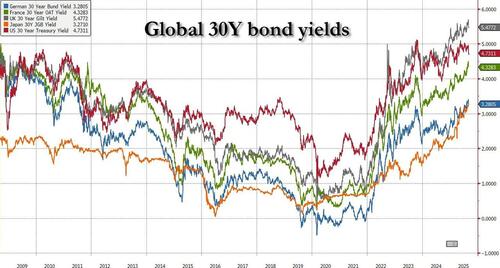
A Historic Divergence in Sovereign Yields
The yield differential between Chinese and United States 10-year sovereign bonds has stretched to its widest point on record. The widening was triggered by a sharp rally in U.S. Treasury yields, which rapidly eroded the relative return advantage that Chinese government paper had previously offered to yield-seeking investors. For the first time in the observable history of the two markets, the gap between the two benchmark ten-year yields has reached an all-time maximum.
Capital Outflow Pressure and Yuan Vulnerability
From an analytic standpoint, the primary risk embedded in this record spread is the acceleration of capital moving out of Chinese assets and into higher-yielding U.S. securities. When the return on Chinese ten-year government bonds lags its American counterpart by a historically unprecedented margin, the economic incentive for both domestic and foreign investors to reposition portfolios toward Treasuries intensifies. The source material explicitly flags the threat of accelerated capital outflows as a direct consequence.
Compounding that outflow pressure is the currency channel: a sustained net sell-off of Chinese assets typically translates into selling pressure on the renminbi, as investors convert yuan into dollars to purchase U.S. bonds. The article identifies the risk of a weaker yuan as a parallel and reinforcing consequence of the widening yield gap, meaning the two risks—capital flight and currency depreciation—feed into one another in a self-reinforcing loop.
What This Means for Forex and Fixed-Income Traders
For traders positioned in the CNY/USD pair or holding Chinese-rate-linked exposures, the record spread should be treated as a structural warning signal rather than a temporary dislocation. The analytic takeaway is straightforward: as long as the U.S. Treasury yield environment remains elevated relative to Chinese sovereign yields, the headwind for the yuan and for Chinese capital markets is likely to persist. Position sizing, hedging strategy, and exposure to Chinese-rate-sensitive instruments all warrant a reassessment in light of a gap that has no prior precedent in the record. Monitoring the pace of any further Treasury yield moves, and the degree to which Chinese policymakers respond, will be critical variables in determining whether the spread stabilises or continues to expand.