Taiwan's Losing Streak Deepens Below Key Threshold
The Taiwan Stock Exchange closed out its second straight session of declines on Tuesday, shedding 142.89 points, or 0.64 percent, to settle at its intraday low of 22,092.21. The index had briefly touched 22,303.50 earlier in the day before succumbing to broader selling pressure, ultimately finishing just under the psychologically important 22,100 level. Across the two sessions combined, the market has lost more than 170 points, representing a cumulative drop of roughly 0.8 percent.
The broad-based weakness was driven by losses in financial institutions, technology names, and the plastics sector. On Wednesday, analysts expect the TSE could face further downside as the global tape tilts negative.
Sector and Stock-Level Detail
Financial stocks bore a heavy share of the selling. Cathay Financial dropped 1.55 percent, E Sun Financial fell 1.60 percent, First Financial lost 0.92 percent, CTBC Financial slipped 0.45 percent, Fubon Financial eased 0.32 percent, and Mega Financial declined 0.26 percent.
In the technology complex, TSMC retreated 0.84 percent, United Microelectronics lost 0.54 percent, Novatek Microelectronics slipped 1.48 percent, MediaTek dropped 0.41 percent, Delta Electronics shed 0.51 percent, Largan Precision tumbled 1.76 percent, and Catcher Technology eased 0.42 percent. Hon Hai Precision was a rare bright spot in the group, gaining 1.09 percent.
The plastics and materials segment also came under pressure. Formosa Plastics declined 1.39 percent, Nan Ya Plastics plunged 2.25 percent, and Asia Cement slipped 0.11 percent.
Wall Street Selloff and Macroeconomic Headwinds
The broader global backdrop has turned sharply bearish. European equities and U.S. indices posted steep losses on Tuesday, and the prevailing forecast for Asian markets on Wednesday is broadly negative given the deteriorating global economic outlook.
On Wall Street, the major averages opened firmly in the red and continued to deteriorate through the close. The Dow Jones Industrial Average fell 626.15 points, or 1.51 percent, to 40,836.93. The Nasdaq Composite dropped 577.33 points, or 3.26 percent, to 17,136.30, while the S&P 500 lost 119.47 points, or 2.12 percent, to close at 5,528.93.
The sell-off was triggered by two key data releases. The Institute for Supply Management reported that U.S. manufacturing activity continued to contract in August, while a separate Commerce Department report revealed an unexpected modest decline in U.S. construction spending for July. Beyond the data, a portion of the selling reflected profit-taking by traders who had bid up prices in the prior session, amid persistent uncertainty over the trajectory of monetary policy.
Fed Rate Expectations and Oil Market Impact
Market participants now almost universally anticipate that the Federal Reserve will deliver a rate cut at its next meeting later this month. However, the magnitude of the move remains a source of debate. According to the CME Group's FedWatch Tool, traders assign a 63.0 percent probability to a quarter-point reduction and a 37.0 percent probability to a half-point cut, underscoring the split in expectations regarding the pace of easing.
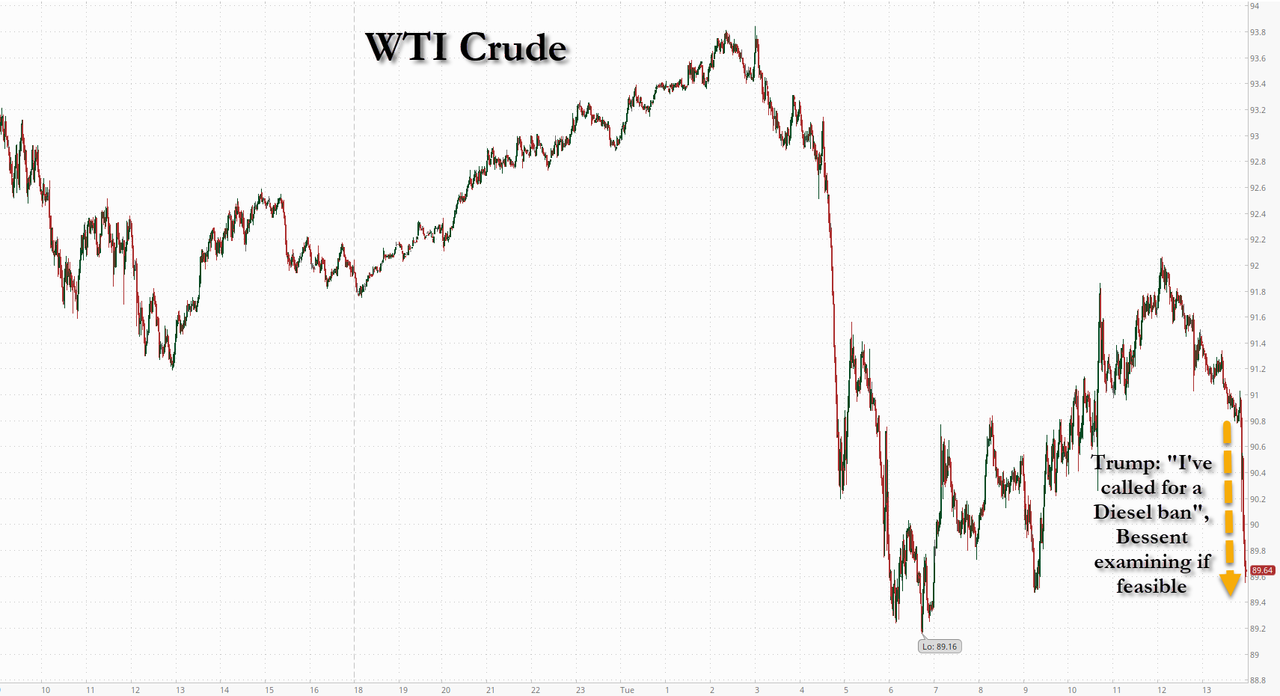
In the energy complex, oil prices retreated to a nine-month low on Tuesday as concerns over potential oversupply linked to OPEC production weighed on sentiment. West Texas Intermediate crude futures for delivery in October closed down $3.21, or 4.4 percent, at $70.34 per barrel. The combination of weak U.S. economic data, rate-cut uncertainty, and declining energy prices creates a challenging environment for risk assets across Asia, with the Taiwan market's next session likely to be no exception.