Stocks slipped into the red on Thursday as Middle‑East tensions pushed crude prices higher, sparking fears of a tighter monetary stance and dragging the broader market down.
The S&P 500 fell 0.18 %, the Dow Jones Industrial Average dropped 0.85 %, and the Nasdaq 100 slipped 0.39 %. Futures followed suit, with the September E‑mini S&P falling 0.18 % and the September E‑mini Nasdaq sliding 0.32 %.
Market Overview
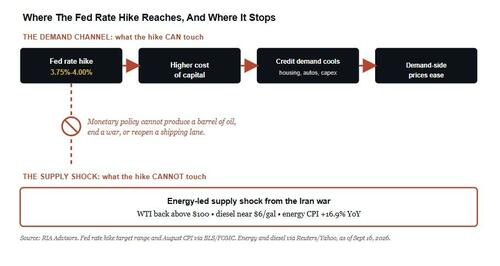
After a modest early‑day rally, the three major U.S. indices closed lower. The 10‑year Treasury yield climbed 5 basis points to 4.66 %, reflecting concerns that higher oil prices could prompt the Fed to raise rates. The market’s reaction to a new report from the Financial Times was largely bearish, noting that Fed Chair Warsh has signaled a willingness to hike rates at the September FOMC meeting should inflation persist or market expectations tilt further toward tightening.
Sector Performance
Technology stocks were the main drag. Datadog plunged 18 % after reporting a second‑quarter adjusted gross margin that missed consensus estimates. AppLovin fell 20 % following a revenue miss, while memory‑chip makers retreated after SanDisk warned of weaker‑than‑expected Q1 revenue. In contrast, several non‑tech names rallied sharply: Motorola Solutions, APA Corp, Paycom Software, Ormat, and Parker‑Hannifin all posted gains after delivering earnings that beat expectations.
Earnings Highlights
Positive corporate results helped cushion the broader downturn. Bloomberg Intelligence’s latest forecast suggests that Q2 earnings could rise 23 %, approaching the 30 % surge seen in Q1, which had already outpaced the 12 % forecast by analysts. AI‑related spending is expected to drive most of this growth, with AI infrastructure stocks projected to contribute roughly 60 % of the S&P 500’s earnings‑per‑share expansion in the second quarter. To date, 86 % of the 430 S&P 500 companies that have reported Q2 earnings have outperformed estimates, according to Bloomberg data.
Economic Data
U.S. labor market and productivity figures also played a role in supporting the market. Weekly initial unemployment claims rose by only 1,000 to 199,000, better than the 205,000 projected. Q2 non‑farm productivity increased 1.4 %, comfortably ahead of the 0.6 % expectation, while Q2 unit labor costs climbed 1.3 %—below the anticipated 2.1 %. These readings reinforced a picture of a resilient labor market and contained inflation.
Oil and Geopolitical Developments
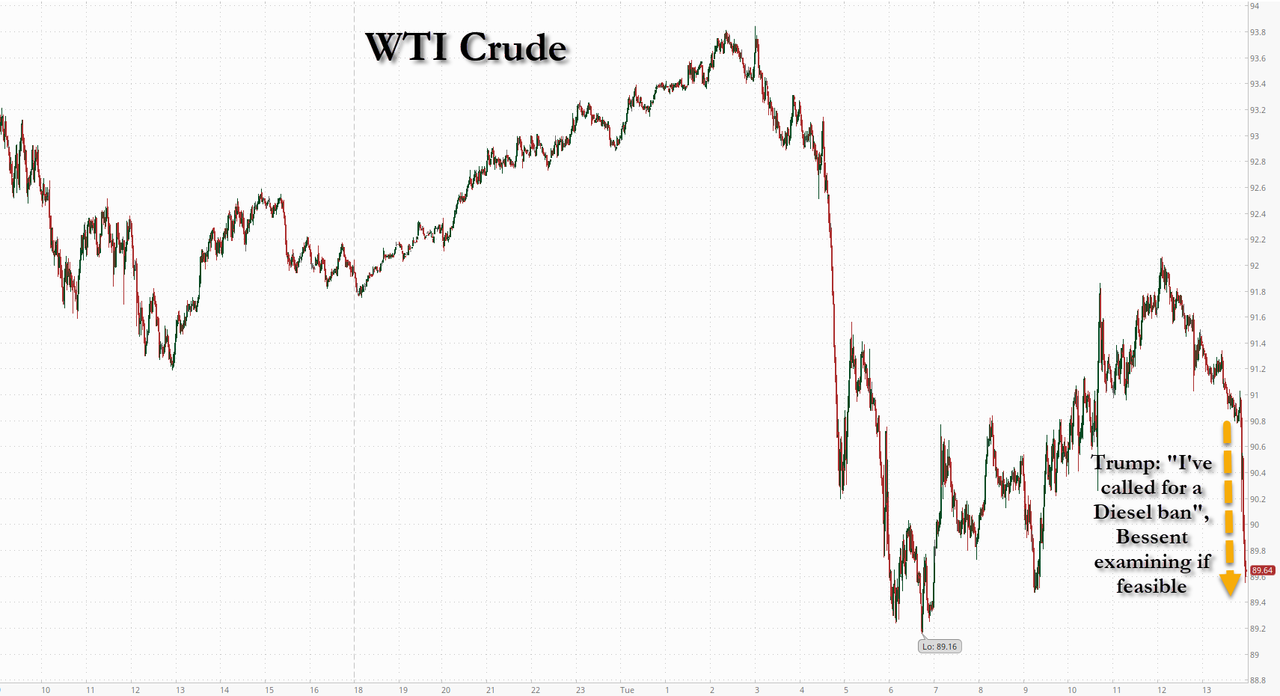
Crude prices surged more than 2 % after Iran’s semi‑official Fars news agency announced that vessels from the U.S., Israel, or any country that has “caused damage” to Iran would be barred from the Strait of Hormuz under a proposed Oman‑Iran deal. The restriction could limit oil exports from several Gulf states. Adding to the volatility, Yemen’s Houthi rebels claimed a ballistic‑missile strike on a Saudi tanker in the Gulf of Aden, and Iran said it had struck “hostile targets” at the Strait’s entrance. The market is awaiting a joint statement from Iran and Oman regarding a partial reopening of the waterway, which officials say could remain active for two to four months but does not guarantee full access. Tehran has indicated that a full normalization would depend on the U.S. lifting its blockade on Iranian ports.
Interest‑Rate Outlook
Investors are pricing in a 58 % probability of a 25‑basis‑point hike at the September 15‑16 FOMC meeting, reflecting the ongoing uncertainty over inflation and market expectations.
International Markets
Across the globe, markets delivered mixed results. The Euro Stoxx 50 finished at a record high, up 0.39 %. China’s Shanghai Composite climbed 0.57 % to a three‑week high, while Japan’s Nikkei‑225 slipped 0.93 %.
Bond Market Movements
The 10‑year U.S. Treasury note finished the day down 12.5 ticks, with the yield climbing 5.3 basis points to 4.666 %. The decline came after a 2 % rise in WTI crude oil, which lifted inflation expectations, and a smaller‑than‑anticipated uptick in weekly jobless claims that underscored a resilient labor market—factors that tend to favor a hawkish stance from the Federal Reserve. A Financial Times report added to the pressure by noting that Fed Chair Jerome Powell is prepared to hike rates at next month’s FOMC meeting if inflation and its expectations strengthen.
Losses in Treasury securities were capped, however, as second‑quarter non‑farm productivity surpassed forecasts while unit labor costs fell short of expectations—signals that could temper Fed tightening.
European government yields also edged higher. The 10‑year German bund rose 2.9 basis points to 3.140 %, and the UK 10‑year gilt climbed 4.7 basis points to 4.938 %.
Eurozone Economic Data
Eurozone retail sales for June slipped 0.3 % month‑over‑month, falling short of the 0.1 % rise that had been anticipated. In contrast, German factory orders for the same month grew 3.1 % m/m, outpacing the 0.5 % increase expected by market observers. Investors are pricing in an 87 % probability of a 25‑basis‑point rate hike at the ECB’s next policy meeting on September 10.
Corporate Earnings and Stock Performance
Software and Technology
- Datadog (DDOG) fell more than 18 % after reporting a Q2 adjusted gross margin of 80 %, below the consensus of 80.7 %.
- Salesforce (CRM) and Atlassian (TEAM) slipped over 3 % and 2 % respectively.
- Intuit (INTU), IBM, and Palantir (PLTR) each dropped more than 1 %.
Airlines and Cruise Lines
- Norwegian Cruise Line (NCLH) declined over 4 %.
- American Airlines (AAL) and Southwest Airlines (LUV) each fell more than 3 %.
- United Airlines (UAL), Alaska Air (ALK), Carnival (CCL), and Royal Caribbean (RCL) all slipped over 2 %.
- Delta Air Lines (DAL) slipped just over 1 %.
Memory Chipmakers
- Western Digital (WDC) dropped more than 13 %.
- Sandisk (SNDK) fell over 6 %, after projecting Q1 revenue between $10.30 B and $10.80 B—below the $11.16 B consensus.
- Micron Technology (MU) slipped over 1 %.
Energy Sector
- Occidental (OXY) rose over 4 %.
- SLB Ltd (SLB) gained over 3 %.
- Baker Hughes (BKR), Devon Energy (DVN), and Halliburton (HAL) each climbed over 2 %.
- Diamondback Energy (FANG), ExxonMobil (XOM), Phillips 66 (PSX), Chevron (CVX), and ConocoPhillips (COP) each advanced over 1 %.
Aerospace and Industrial
- Honeywell Aerospace (HONA) fell more than 23 %, after trimming its full‑year organic growth forecast to 4 %–5 % from an earlier 7 %–9 %.
Consumer and Financials
- AppLovin (APP) dropped over 19 % following a Q2 revenue of $1.92 B, below the $1.94 B consensus.
- HubSpot (HUBS) fell over 19 % after projecting Q3 revenue of $924 M–$925 M, versus the $942.5 M consensus.
- Celsius Holdings (CELH) slipped over 18 % after reporting Q2 revenue of $817.9 M against the $872.6 M expectation.
- Zillow Group (ZG) declined over 8 % after forecasting Q3 revenue of $745 M–$760 M, below the $773.6 M consensus.
- Host Hotels & Resorts (HST) fell over 6 % after raising its full‑year capex estimate to $567 M–$647 M from $525 M–$625 M, above the $576.8 M consensus.
- Paycom Software (PAYC) surged more than 23 % after lifting its full‑year revenue estimate to $2.20 B–$2.21 B from $2.28 B–$2.20 B, surpassing the $2.19 B consensus.
Corporate Earnings Update
Unity Software (U) finished the day with a surge of more than 15 % after announcing second‑quarter revenue of $546.5 million, surpassing analysts’ expectations of $515 million. The software developer’s robust top‑line growth reinforced its position as a leading player in the gaming and real‑time graphics sector.
Ormat Technologies (ORA) saw shares climb over 9 % following a revision of its full‑year revenue outlook to a range of $1.15 billion–$1.20 billion, up from the prior forecast of $1.11 billion–$1.16 billion. The adjustment reflected stronger demand for its geothermal and solar power assets.
Motorola Solutions (MSI) led the S&P 500 gainers, posting an increase of more than 8 % after reporting Q2 net sales of $3.13 billion, which exceeded the consensus estimate of $3.00 billion. The wireless‑communications equipment maker highlighted solid revenue growth across its mission‑critical and enterprise‑wireless divisions.
Parker‑Hannifin (PH) added over 7 % to its share price on the back of Q4 net sales of $5.76 billion, outpacing the $5.58 billion forecast. The industrial‑automation conglomerate’s earnings reflected continued momentum in its motion control and fluid‑system businesses.
Albemarle (ALB) posted a gain of more than 5 % after reporting Q2 adjusted earnings per share of $3.75, well above the consensus of $3.22. The lithium‑producing firm’s performance underlined the ongoing demand for battery‑grade materials.
Earnings Reports (8/7/2026)
Additional companies released results on Friday, including Ascendis Pharma A/S (ASND), Freedom Holding Corp/NV (FRHC), Mobility Global Inc (MBGL), Oklo Inc (OKLO), PPL Corp (PPL), Take‑Two Interactive Software (TTWO), and Vistra Corp (VST). While the specific figures for these firms were not highlighted in this briefing, their disclosures contribute to the broader market narrative.
The latest market commentary was provided by Barchart, with the author’s observations not necessarily reflecting Nasdaq, Inc.’s official stance. As of this release, the data feed for real‑time market updates was temporarily unavailable.
In summary, a wave of earnings surprises across technology, industrial, and energy sectors helped lift the market, even as geopolitical tensions in the Middle East and broader economic uncertainties continue to weigh on investor sentiment. The day’s positive corporate results suggest resilience in certain growth segments, though the overall environment remains volatile.