Artificial intelligence, shifting regulations, and evolving business models dominated this week’s financial headlines, as brokers broadened their tech arsenals and regulators deepened scrutiny of complex products and automated trading. In a landscape where a single bot can move millions of dollars in seconds, the question of who bears responsibility when an autonomous system errs has never been more pressing.
AI‑Powered Trading and the Liability Conundrum
The rapid deployment of AI agents in retail trading has sparked a debate over accountability. While brokers have begun linking artificial agents to client accounts, the regulatory framework governing “agentic” trading remains thin. Robinhood has clarified that customers are ultimately responsible for the construction and execution of their bots, yet legal scholars, brokers, and regulators anticipate that firms will face heightened duties as these systems grow more sophisticated.
Early statistics from Robinhood show that, within the first few weeks of agentic trading, more than 50,000 users opened such accounts and were trading millions of dollars daily in equities and options. To mitigate risks, potential safeguards include kill switches, circuit breakers, and future “Know Your Agent” rules that would require firms to disclose the logic behind autonomous decision‑making.
Scope Markets Expands Copy Trading into MetaTrader 5
Scope Markets has introduced Scope Copy, a copy‑trading platform for MetaTrader 5, powered by PLUGIT’s YOONIT technology. After a beta phase that saw over 500,000 replicated trades, the service launched with more than 130 strategy providers. Clients can fine‑tune risk levels and trade sizes, while providers earn performance fees ranging from 10 % to 50 %. A high‑water‑mark structure ensures that providers must first recoup any prior losses before collecting additional fees. The platform also features an inverse‑copying option, allowing a provider’s buy order to be mirrored as a sell order in a client’s account.
London Capital Group Sees Leadership Takeover
London Capital Group (LCG) underwent a significant ownership shift when senior executives Matthew Basi and David Worsfold acquired the stakes previously linked to Charles Sabet. Basi, the firm’s managing director, and Worsfold, its chief executive, now control the FCA‑regulated business through MBDW Holdings. The transaction, conducted with Walder Wyss on behalf of creditors following the 2024 bankruptcy of FlowBank—a Swiss bank founded by Sabet—was confirmed by Companies House filings, although the purchase price was not disclosed. The deal places LCG firmly under its current leadership, which has already positioned the firm as an exclusive introducing broker for IG following a strategic business model shift.
Other Notable Developments
- iFOREX trimmed its earnings outlook after a sharp decline in July trading income.
- In Cyprus, a major payments deal entered the market, although details remain sparse.
- Capital.com announced the separation of its UAE spot crypto operations.
- OKX reported a surge in activity following Binance’s retreat from Europe.
These stories underscore a week of rapid change, as technology, regulation, and corporate strategy intersect to reshape the financial services landscape.
Cyprus Fintech Deal Draws Institutional Capital
Cyprus‑based payments provider payabl. has agreed to sell a 50 % stake to private‑equity group ECM Partners in a transaction valued at more than €100 million. Group chief executive Ugnė Buračienė will keep the remaining half of the business and maintain her current position. The deal is projected to rank among the most valuable fintech transactions in the island’s history. Payabl. offers payment‑processing and gateway solutions, including foreign‑exchange and digital‑asset on‑ and off‑ramps, and primarily serves clients in the retail brokerage sector. The transaction underscores a growing appetite from institutional investors for Cyprus’s maturing fintech ecosystem, where several firms are moving beyond founder‑led models.
iFOREX Slashes 2026 EBITDA Forecast After Sharp Income Drop
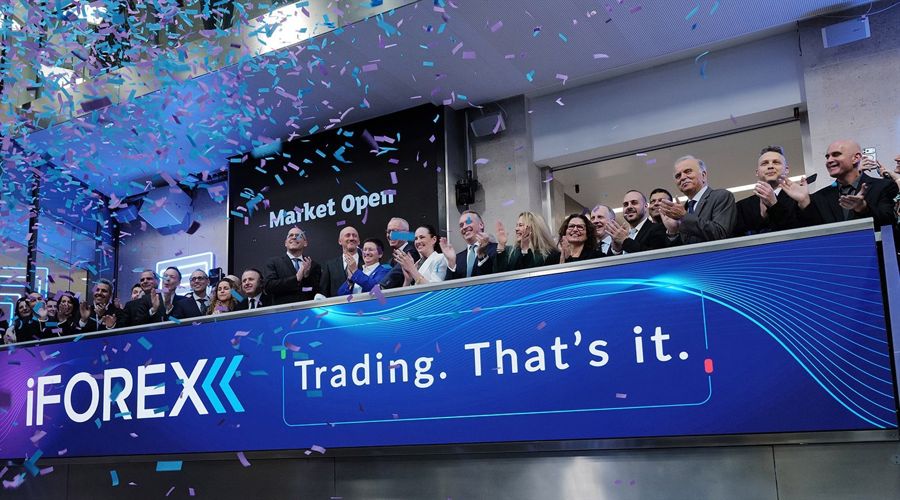
The CFD broker iFOREX lowered its adjusted EBITDA outlook for 2026 to a range of $0.5 million–$2.5 million after a steep fall in trading income during July. In that month, the company recorded roughly $720,000 in trading revenue, a 77 % decline from the approximately $3.1 million earned a year earlier. Management cited the sharp appreciation of the yen following coordinated U.S.–Japan currency intervention as a key factor that eroded its net client exposure. A concurrent period of low market volatility also weighed on August earnings. Despite a 40 % year‑on‑year rise in new customers and an 8 % uptick in deposits in July, the gains were insufficient to offset the income erosion. Net cash reserves fell to roughly $10 million by August 17.
XTB Faces Regulatory Review Amid Market Volatility
Poland’s Financial Supervision Authority announced that it is continuing an assessment of how CFDs are offered, without providing a timetable or specifics regarding potential restrictions. The scrutiny is particularly significant for XTB, where CFDs account for more than 95 % of revenue; the broker is attempting to diversify through equities and spot‑crypto products. The regulatory uncertainty coincided with a sharp decline in XTB shares: the stock slipped 4.1 % on Monday and another 2.7 % by late Tuesday, ending nearly 7 % below its previous Friday close. While the sell‑off may have been influenced by the regulatory comments, there is no direct evidence linking the two events.
Oil Market Volatility Spurs Retail Participation
Geopolitical tensions and supply‑side concerns have amplified oil‑price volatility, drawing heightened interest from retail traders across a spectrum of products, from CFDs and ETFs to options and futures. Micro WTI futures trading surged 317 % year‑on‑year, while the U.S. Brent Oil Fund (BNO) attracted $419 million in inflows during 2026. Oil prices have been buoyed by uncertainties surrounding the U.S.–Iran conflict, disruptions to shipping lanes, and Ukrainian attacks on Russian refineries. Retail activity in Micro WTI Crude Oil (MCL) futures has pushed the year‑to‑date average daily volume to 271 000 contracts, with an average daily open interest exceeding 38 000 contracts. A notable portion of this volume originates outside the United States, reflecting the global impact of geopolitical instability.
Regulatory and Market Shifts in Crypto and AI Trading
The week’s developments also highlighted a tightening of forecasts for global oil demand. OPEC and the International Energy Agency both lowered their projections, underscoring the heightened uncertainty in a market that is increasingly swayed by geopolitical headlines.
Capital.com Expands into UAE Spot Crypto
Capital.com is set to launch a spot‑crypto offering for clients in the United Arab Emirates through a new, separately regulated affiliate, Capital Vault UAE. The affiliate has secured a full federal virtual‑asset licence from the Capital Market Authority, enabling it to trade virtual assets as an agent or principal and to provide custody services. When the service becomes available, customers will be able to purchase virtual assets via the existing Capital.com app, with the licensed affiliate handling execution, settlement and custody. No launch date has yet been announced, but the arrangement will create distinct regulatory and operational frameworks for crypto and CFDs, even though both services will remain accessible through the same application.
OKX Europe Sees a Surge in App Usage
OKX Europe reported a sharp rise in app downloads and customer inflows after Binance withdrew its MiCA licence application in Greece and halted onboarding of new EU clients. CEO Erald Ghoos noted that downloads of the exchange’s EU app climbed almost 160 % over the following 12 days, while inflows from Binance‑linked accounts grew more than eightfold. The magnitude of this migration could not be independently verified against broader on‑chain balance data. Ghoos also pointed out that 95 % of European crypto‑derivatives volume remains outside regulated EU venues, and argued that shifting that volume back onshore would require regulators to crack down on offshore operators while licensed platforms broaden their product offerings to remain competitive.
The Growing Question of Liability in AI‑Driven Trading
The rapid arrival of autonomous trading agents has brought a pressing regulatory question to the fore: who bears responsibility when an AI system makes a costly error? Brokers are beginning to connect AI tools to client accounts, but the legal framework governing agentic trading is still sparse. Robinhood, for instance, has stated that customers are ultimately responsible for how their AI agents are built and for the actions they take. However, lawyers, brokers and regulatory experts anticipate that firms will face increasing obligations as the technology matures. The industry is still in the process of defining the scope of these responsibilities, and regulators are working to clarify the rules around liability for autonomous trading.
Agentic Trading Takes Off on Robinhood
Within the opening weeks of offering autonomous trading capabilities, Robinhood has seen more than 50,000 users sign up for agentic accounts. These participants are collectively moving multi‑million‑dollar volumes each day across equities and options, employing sophisticated algorithms and even automating routine spending decisions that were previously handled manually.
Emerging Safeguards for Autonomous Trading
Industry observers are already flagging a suite of protective measures that could become standard. Among the proposals are emergency “kill‑switch” functions and market‑wide circuit breakers designed to halt trading if algorithms behave erratically. Regulators are also contemplating a “Know Your Agent” regime, mirroring existing client‑identification rules, to ensure that firms can verify the identity and risk profile of the AI entities they host. The urgency of these safeguards is growing as AI agents gain deeper, more direct access to broker platforms.
Copy‑Trading Innovation on MetaTrader 5
Scope Markets has introduced “Scope Copy,” a fresh copy‑trading service built for MetaTrader 5. The platform, which leverages PLUGIT’s YOONIT technology, moved out of beta after processing in excess of 500,000 replicated trades and now partners with over 130 strategy providers. Users can fine‑tune risk exposure and trade size, while providers may levy performance fees ranging from 10 % to 50 % of profits. These fees operate on a high‑water‑mark basis, meaning a provider must first recoup any prior losses before earning additional performance compensation. An added twist allows clients to take the opposite side of a provider’s trade—for example, a buy order from the strategy becomes a sell order in the subscriber’s account.
Ownership Shift Puts LCG Under Management Control
London Capital Group has undergone a change in its shareholding structure after its two senior executives, Managing Director Matthew Basi and Chief Executive Officer David Worsfold, purchased the stakes formerly associated with Charles Sabet. The duo now holds the FCA‑regulated business through MBDW Holdings. The acquisition was executed by Walder Wyss on behalf of creditors following the 2024 bankruptcy of FlowBank, the Swiss bank founded by Sabet. Companies House filings confirm the transaction, though the purchase price was not disclosed. The realignment places LCG squarely under the direct control of its current leadership, and the firm continues to operate as an exclusive introducing broker for IG after its earlier business‑model shift.
Private‑Equity Buys Stake in Cyprus Payments Firm
Cyprus‑based payments provider payabl. has reached an agreement to sell half of its equity to private‑equity house ECM Partners in a deal valued at more than €100 million. Group CEO Ugnė Buračienė will retain the remaining 50 % and remain at the helm. The transaction ranks among the most sizable fintech deals ever recorded in Cyprus. payabl. offers payment‑processing and gateway solutions, including foreign‑exchange on‑ and off‑ramps, catering primarily to the retail brokerage market. The sale underscores the rising interest of institutional capital in the island’s maturing fintech ecosystem, where several firms are transitioning from founder‑led structures to broader ownership models.
iFOREX Lowers 2026 EBITDA Outlook Amid Income Collapse
iFOREX has trimmed its full‑year 2026 adjusted EBITDA guidance to a range of $0.5 million to $2.5 million after a steep drop in trading revenue for July. The broker reported roughly $720 000 in trading income for that month, a 77 % decline from the approximately $3.1 million recorded a year earlier. Management cited the sharp appreciation of the Japanese yen—spurred by a coordinated US‑Japan currency intervention that worked against the firm’s net client exposure—as a key factor. Additionally, subdued market volatility throughout August further eroded trading income.
XTB’s CFD‑Heavy Model Faces Regulatory Scrutiny
Poland’s Financial Supervision Authority has continued its review of how contracts for difference are marketed, but has not yet set a timetable or disclosed potential restrictions. The inquiry is particularly consequential for XTB, whose CFD business contributes more than 95 % of its earnings. The broker is attempting to broaden its product suite with equities and spot‑crypto offerings, yet the uncertainty surrounding CFDs has coincided with a noticeable slide in the company’s share price. On Monday the stock fell 4.1 %, and by Tuesday morning it had slipped an additional 2.7 %, leaving the shares almost 7 % below the previous Friday’s close. While the decline follows the regulator’s comments, there is no direct evidence that the comments caused the sell‑off, and XTB’s shares had been on an upward trajectory just before the dip.
Surge in Oil‑Related Trading Amid Geopolitical Tension
Retail interest in oil derivatives has expanded as geopolitical developments and supply concerns push prices higher. Trading volume has risen across CFDs, exchange‑traded funds, options and futures. Micro WTI futures, for example, have seen a 317 % year‑on‑year increase, and the U.S. Brent Oil Fund (BNO) drew $419 million in inflows during 2026. Oil prices have been buoyed by uncertainty around the U.S.–Iran conflict, disruptions to shipping lanes, and Ukrainian attacks on Russian refineries. Retail participation in Micro WTI Crude Oil (MCL) futures has pushed the year‑to‑date average daily volume to 271 000 contracts, with an average daily open interest exceeding 38 000 contracts. A sizable fraction of this volume originates outside the United States, reflecting the global nature of the market.
Despite the bullish sentiment, OPEC and the International Energy Agency have lowered their forecasts for worldwide oil demand. The clash between rising geopolitical risk and shrinking demand projections highlights the volatility of a market increasingly driven by headlines.
Capital.com Expands UAE Crypto Services Through Capital Vault
Capital.com will begin offering spot‑crypto services to clients in the United Arab Emirates via a separately regulated affiliate, Capital Vault UAE. The affiliate has secured a full federal virtual‑asset licence from the Capital Market Authority, enabling it to act as an agent or matching principal and to provide custody services. Once the service is launched, customers will be able to purchase virtual assets through the existing Capital.com mobile application, with execution, settlement and custody handled by Capital Vault. Although no launch date has yet been announced, the arrangement will establish distinct regulatory and operational frameworks for crypto and CFDs, even though both services remain accessible through the same user interface.
OKX Europe Sees a Massive Migration from Binance
Following Binance’s decision to withdraw its MiCA licence application in Greece and halt the onboarding of new EU clients, OKX Europe reported a sharp uptick in app downloads and customer inflows. CEO Erald Ghoos noted that downloads of the EU‑specific app increased by almost 160 % over the subsequent 12 days, while inflows from accounts formerly linked to Binance rose more than eightfold. The extent of this migration could not be independently verified using on‑chain balance data.
Ghoos also highlighted the persistent divide between licensed and offshore crypto trading, estimating that 95 % of European derivatives volume remains outside regulated EU venues. He argued that to bring trading volume back onshore, regulators would need to enforce action against offshore platforms while licensed exchanges broaden their product ranges to remain competitive.
The combination of regulatory uncertainty, shifting market dynamics, and rapid changes in client behaviour underscores the volatile landscape that forex, commodities, and crypto firms navigate today. As institutions adapt to new rules and geopolitical pressures, market participants must stay vigilant to manage risk and capitalize on emerging opportunities.