A Record-Breaking Takeover of OANDA
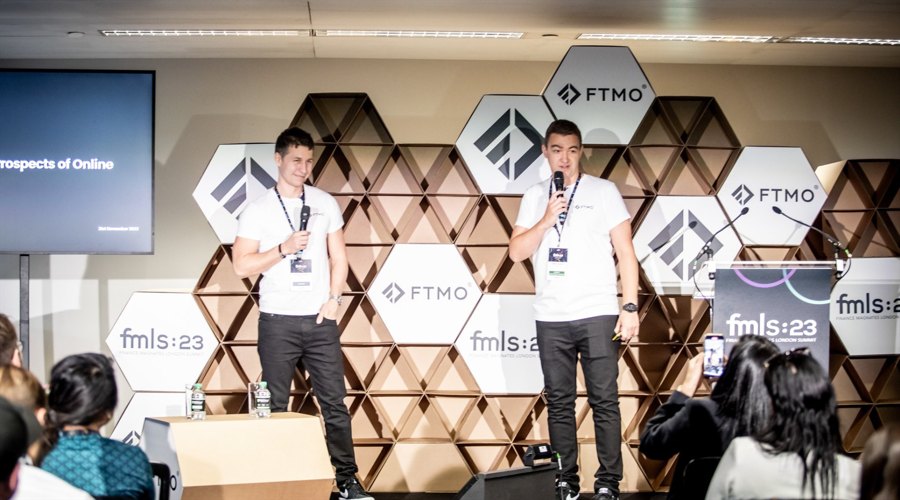
Czech prop-trading powerhouse FTMO has disclosed in its annual filings that it paid more than 8.79 billion Czech koruna – equivalent to approximately $422 million at current exchange rates – to acquire OANDA from private-equity firm CVC. The transaction was formally completed on 1 December 2025, after FTMO's parent entity, OHM, agreed to purchase the broker earlier in the year.
The price tag represents a significant premium over what CVC originally paid when it took OANDA private in 2018, a deal that closed at roughly $160 million. Before the acquisition was made public, Czech business outlet e15 cited an anonymous source who pegged the expected price at "hundreds of millions of dollars" and "higher units of billions of crowns," a range that the final figure comfortably exceeds.
To fund the purchase, OHM secured a $250 million credit line from a syndicate of Czech banks led by UniCredit in November 2025, a detail first reported by Finance Magnates. The financing structure underscores how the deal was treated as a capital-intensive, balance-sheet-level commitment rather than a simple cash acquisition.
Revenue Surge and Client Retention
OHM's consolidated results for the 2025 fiscal year show the group generated 8.9 billion CZK in revenue, roughly $427 million, marking a 30 per cent year-on-year jump. The engine behind that growth was FTMO's proprietary-trading model itself: paid evaluation and funded-trader orders climbed close to 50 per cent to 1.27 million over the twelve-month period.
Retention metrics are equally striking. Returning clients now contribute close to 80 per cent of FTMO's total revenue, which management frames as a stable, predictable income stream. At the same time, the average dollar value of each repeat customer order continues to rise, suggesting that experienced traders are allocating larger capital to their prop-firm accounts rather than simply opening more positions.
For readers in the Broker News section, these figures matter because they signal that FTMO is no longer a niche European challenger. A retained-client base of that size, combined with nearly half a million-dollar revenue run-rate, gives the firm enough recurring cash flow to absorb a sub-$500 million acquisition and still fund organic product development.
US Market Re-Entry and the MetaTrader 5 Advantage
Perhaps the most strategically consequential element of the OANDA deal is what it unlocks in the United States. FTMO had exited the US market in early 2024, but last year it re-launched prop-trading services on American soil by partnering with OANDA even before the acquisition closed. That early collaboration allowed the firm to establish a compliant trading pathway through OANDA's existing US broker-dealer licence.
The result: the United States has become FTMO's second-largest revenue market, trailing only the United Kingdom. More importantly for the retail-trading community, FTMO is now the only prop firm in the US that offers the MetaTrader 5 platform – a direct consequence of OANDA's licensed US operations and the MT5 infrastructure it maintains.
For US-based traders who have been limited to a narrow set of prop-firm providers and trading platforms, the entry of a firm with FTMO's European track record and MT5 access could intensify competition on pricing, evaluation difficulty, and payout terms in what is the world's largest retail-trading market.
Balance Sheet Strength and Forward Outlook
The acquisition has materially expanded OHM's balance sheet. Total consolidated assets stood at 30.7 billion CZK (around $1.47 billion) as of 31 December 2025, a figure that reflects both ongoing organic investment in FTMO's core prop-trading operations and the consolidation of OANDA's own asset base following the deal's completion.
Consolidated equity reached 13 billion CZK (approximately $625 million) at year-end, giving the group a solid capital cushion as it pursues further strategic growth. The combination of a $625 million equity base, a $250 million committed credit facility, and 30 per cent top-line growth positions FTMO to absorb regulatory costs in the US, invest in technology, and potentially explore additional geographic or product expansions in the coming years.
For the broader broker and prop-trading landscape, the deal confirms a trend: prop firms are moving up the value chain by acquiring regulated broker partners, thereby gaining direct market access, platform diversity, and a stronger balance sheet than the typical asset-light prop-firm model.