Major Broker Transactions and Regulatory Leadership Shifts
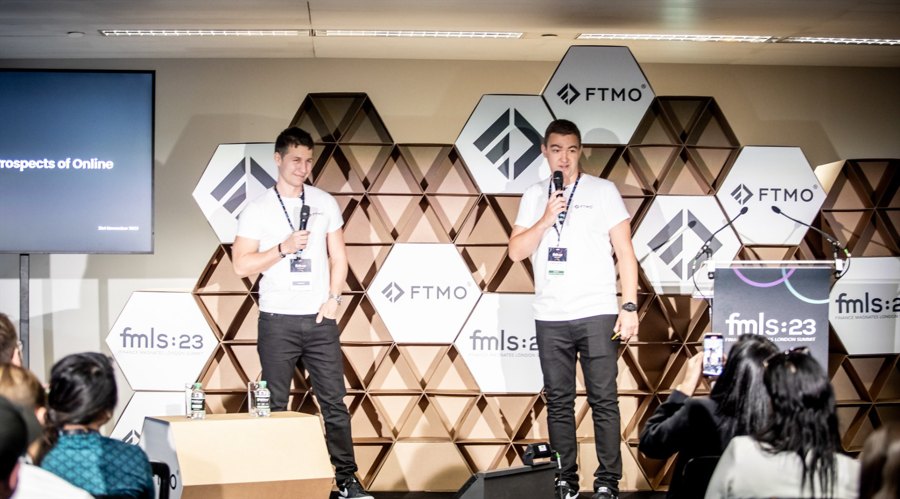
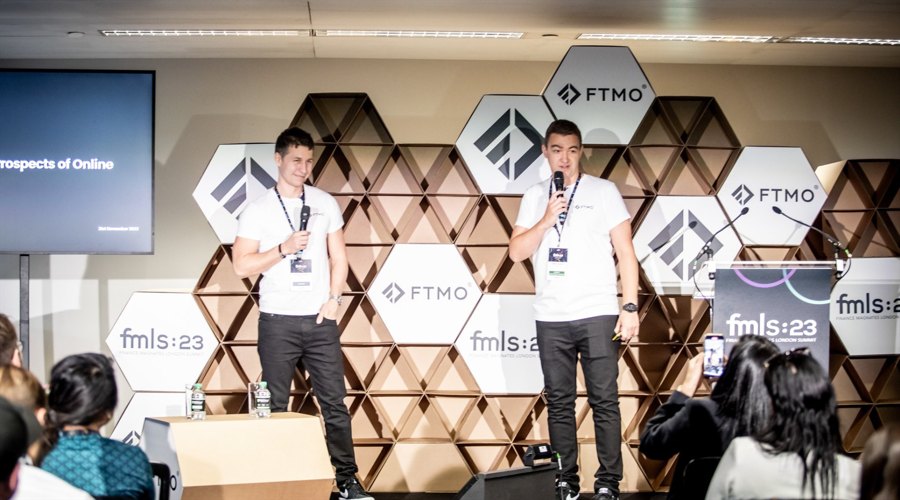
This week delivered a dense slate of developments across the retail trading and financial services landscape, ranging from multi-hundred-million-dollar acquisitions to leadership changes at key regulators. The most prominent story centred on prop-trading firm FTMO, which finally revealed the full purchase price of its OANDA acquisition after its parent company filed 2025 annual financials.
The filing confirmed that FTMO paid in excess of CZK 8.79 billion for the broker, a sum equivalent to roughly $422 million at prevailing exchange rates. The transaction was completed on 1 December 2025, with FTMO acquiring OANDA from private equity firm CVC. FTMO's parent, OHM, reported 2025 revenue of CZK 8.9 billion, marking a 30% year-on-year increase. Paid prop-trading orders climbed by nearly 50% to 1.27 million over the period. Notably, returning clients accounted for close to 80% of total revenue, and the United States emerged as FTMO's second-largest market, a position bolstered by its OANDA partnership.
In Cyprus, the Securities and Exchange Commission welcomed new leadership. George Karatzias was named chairman, replacing Dr George Theocharides, who had headed the regulator since September 2021. Karatzias had previously held the vice-chairman role at CySEC between 2021 and 2024 before moving to the Central Bank of Cyprus as an executive board member. Loukas Lagoudis was concurrently appointed vice-chairman. During Theocharides' tenure, the regulator ramped up supervisory activities and created a national registry for crypto-asset service providers in line with the EU's MiCA framework.
For traders operating under CySEC oversight, the leadership transition signals continuity in the regulator's enforcement posture, though any shifts in supervisory priorities will become apparent in the months ahead.
Regulatory Scrutiny and Broker Restructuring
Nigeria's draft regulatory framework for online forex and CFD trading attracted fresh industry commentary this week. The Nigerian SEC published the proposed rules on 1 September under the Investments and Securities Act 2025. SALVUS managing director Nikolas Xenofontos described the framework as broadly coherent but questioned its pricing structure. He pointed to several protective measures, including negative balance protection, a mandatory close-out rule triggered at 50% of required margin, client-fund segregation, and restrictions on affiliate marketing, influencer promotion, and volume-based incentive schemes.
Under the draft, leverage of up to 1:400 is permitted on major currency pairs. Paid-up capital requirements are set at 3 billion naira for market makers and 2 billion naira for STP or ECN dealers. Technology providers would need to post 5 billion naira in capital and ensure 30% local ownership. For retail forex traders in emerging markets, the framework represents a significant step toward formalised oversight, though the capital thresholds may limit the number of firms willing to operate in the jurisdiction.
On the operational side, IG Group is set to eliminate hundreds of positions as it merges its regional consumer divisions into a single unit dubbed IG Consumer, according to a Sky News report. The company's headcount stood at approximately 2,300 at the end of June, though the exact number of planned redundancies has not been disclosed. Consultation proceedings have already begun in the UK, with discussions scheduled across Poland, France, Spain, Sweden, Switzerland, Germany, Italy, Bermuda, the UAE, and India during September. IG characterised the move as part of a strategic review and updated organisational model. The consolidation brings together its UK and Ireland, European, and Asia-Pacific and Middle East consumer businesses, while North America and the institutional division remain separate. An earlier restructuring plan from 2023 had already called for a 10% global headcount cut of roughly 300 staff and targeted £50 million in annual savings phased across fiscal 2024 to 2026.
For active IG clients, the restructuring raises questions about service continuity and potential changes to platform support, particularly in smaller European markets where headcount reductions could be felt.
Broker-Specific Changes Affecting Retail Traders
Valutrades has suspended the acceptance of new client accounts across both its UK-regulated and Seychelles-regulated entities. The broker's CEO, Graeme Watkins, stressed that the firm is not leaving the global market but is undergoing internal changes. The decision follows a year of declining client activity, trading volumes, and account numbers in 2025, even as annual turnover edged up to £2.25 million from £1.94 million the prior year. Including interest income, Valutrades posted a net loss of £671,705 for the year, an improvement from a £2.59 million loss in the preceding period. In March 2026, the company secured a £600,000 capital injection after cumulative losses across 2023 and 2024 surpassed £6 million.
Valutrades subsequently characterised its day-to-day operations as "business as usual" while confirming the onboarding pause and the discontinuation of service to certain client segments. The broker said it is conducting a strategic review of its client portfolio and has not exited any market. New applicants will face stricter screening, especially in higher-risk client categories or jurisdictions. The firm also referenced short-term technical adjustments to its KYC and onboarding workflows without specifying which services, client tiers, or jurisdictions are affected. It offered no timeline for resuming onboarding, leaving the duration and scope of the changes uncertain. Existing Valutrades clients should monitor communications for any changes to margin structures, platform availability, or fund withdrawal processes during this transition period.
Meanwhile, StoneX is phasing out the City Index brand in the UK, with new accounts migrating to StoneX Trading effective 12 September. The move brings an end to a 43-year brand history dating back to 1983. Current City Index clients will retain their existing accounts, trading platforms, and support arrangements, meaning no account migration is required. The rebranding places the retail operation squarely under the StoneX parent brand after six years of ownership. The decision follows a softer quarter for the group's self-directed and retail segment: FX and CFD revenue dropped 19% year on year to $64.7 million in the June quarter, while average daily volume fell 27% to $6.805 billion. StoneX attributed the revenue decline primarily to lower trading volume and did not connect the results to the brand change.
Broader Market and Technology Developments
The CFTC's regulatory approach to prediction markets and sportsbooks continues to hinge on the mechanics of event contracts. The agency has acknowledged that key statutory terms such as "gaming" and "involve" lack clear definitions in law. The distinction matters as US prediction-market platforms seek federal oversight while individual states continue to apply gambling regulations. A traditional sportsbook sets its own odds and acts as the counterparty to customer wagers. By contrast, an event-contract exchange operates an order book, matches participants against each other, and takes no directional position. Contracts on such platforms can trade before settlement and resolve at either $1 or zero. The regulatory question therefore extends well beyond nomenclature, touching on price formation, counterparty structure, settlement mechanics, and whether the venue maintains neutrality.
In the ETF space, this week's analysis highlighted a growing shift toward tactical trading rather than purely long-term portfolio allocation. Tradeweb data showed European-listed ETF activity hit €77.5 billion in July, up nearly 30% year on year, with 96% of tickets processed through its automated intelligent execution tool. US ETF notional trading reached $90.6 billion, a 45% increase from the prior year. Institutional execution is increasingly relying on automated RFQs, NAV trading, market-on-close orders, and algorithmic strategies. On the retail side, ETF inflows and trading activity have surged, and leveraged ETF assets reached a record $218 billion. The data suggests ETFs are being deployed more frequently for short-term sector, thematic, and tactical exposures.
Finally, OpenAI launched a finance-specific version of ChatGPT aimed at analysts, bankers, and other institutional users. The product integrates ChatGPT with market data, company filings, and source-backed research tools, drawing on financial datasets from providers including Daloopa, PitchBook, and LSEG News. OpenAI stated the system will cover earnings transcripts, financial statements, and company fundamentals, enabling finance teams to trace figures back to source material. The initial release runs on the GPT-6 Astra model, with newer models expected to supersede it as they become available. The launch underscores OpenAI's broader push into enterprise applications; the company noted that its consumer and enterprise businesses are now nearly evenly split, underscoring the growing strategic importance of corporate clients.